

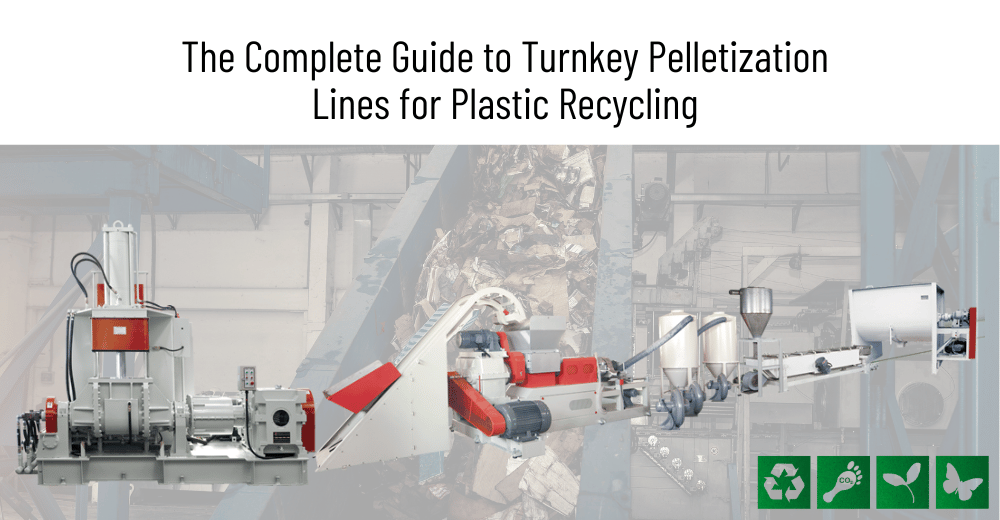
Choosing a turnkey pelletization line is not simply about connecting a crusher, extruder, and pelletizer.
The real challenge is making sure every stage—from waste preparation and feeding to extrusion, filtration, cooling, and pelletizing—is properly matched to your material, required output, pellet quality, and factory conditions.
For manufacturers processing EVA, TPR, PE, PP, or other plastic waste, the wrong equipment combination can create production bottlenecks even when each individual machine appears to have sufficient capacity.
This guide explains how a complete plastic recycling and pelletizing line works, when a turnkey system makes sense, and what manufacturers should evaluate before selecting a line.
Quick Answer: When Does a Turnkey Pelletizing Line Make Sense?
A turnkey pelletizing line is worth considering when your recycling process requires several coordinated stages, such as:
Size Reduction → Material Preparation → Feeding → Extrusion → Filtration → Cooling → Pelletizing → Collection
Instead of selecting each machine independently, a turnkey system allows the entire process to be configured around the actual material condition, required capacity, pellet specifications, available factory space, and downstream application.
However, not every manufacturer needs a completely new line.
If your existing crusher, extruder, cooling system, or other equipment is still suitable, upgrading only the production bottleneck may be more practical.
What Is a Turnkey Plastic Recycling & Pelletizing Line?
A turnkey plastic recycling and pelletizing line is an integrated production system designed to convert suitable plastic waste into reusable pellets through multiple coordinated processing stages.
Depending on the material and waste condition, the system may include:
- Crushing or shredding
- Washing and material preparation
- Drying or dehydration
- Feeding
- Extrusion
- Degassing
- Filtration
- Cooling
- Pelletizing
- Screening and collection
The important point is that not every recycling project requires every stage.
Clean in-house production scrap, for example, may require much less pretreatment than externally collected plastic waste containing moisture, dirt, labels, or other contaminants.
A properly configured turnkey line should therefore be designed around the material—not around a fixed list of machines.
Manufacturers evaluating a complete system can explore Jian Kwang's Plastic Recycling & Pelletizing Line for more information about available recycling configurations.
Do You Need a Turnkey Line or Individual Machines?
This is one of the first questions manufacturers should answer before requesting a quotation.
| Consider a Turnkey Line When | Individual Equipment May Be Enough When |
|---|---|
| You are building a new recycling operation | Existing upstream and downstream equipment is still usable |
| Multiple processing stages must work together | Only one production bottleneck needs to be upgraded |
| Material transfer between machines needs to be planned | Existing machines already match the required capacity |
| Factory layout and utilities need complete planning | Your existing factory layout is already established |
| You prefer one supplier to coordinate the complete process | Your engineering team can integrate the equipment internally |
The decision should be based on your existing equipment, actual bottlenecks, material condition, target capacity, factory layout, and future production plans.
How Does a Complete Pelletizing Line Work?
Although the exact configuration varies, a complete recycling and pelletizing process can generally be understood through the following stages.
1. Crushing or Shredding
Large or irregular plastic waste first needs to be reduced to a manageable size.
A crusher or shredder can process materials such as edge trims, production scraps, films, blocks, sheets, and other suitable waste into smaller pieces for more stable downstream handling.
The correct size-reduction equipment depends on the form, size, density, toughness, and volume of the waste.
For materials requiring stronger size reduction, manufacturers can also explore Jian Kwang's Powerful Shredder.
2. Washing, Dehydration, and Material Preparation
Not every material requires washing.
Clean production scrap may be suitable for further processing with relatively little pretreatment, while contaminated material may require washing, separation, dehydration, or drying.
The objective is to provide a more consistent feedstock for extrusion rather than simply adding more equipment to the line.
3. Stable Feeding
Feeding performance can significantly affect the stability of the entire pelletizing process.
Lightweight films, foam scraps, rigid regrind, and other materials have different bulk densities and feeding characteristics.
A feeding solution should therefore be selected according to the physical condition of the actual waste.
4. Kneading, Extrusion, and Filtration
The extrusion stage processes the prepared material under controlled temperature and mechanical conditions.
Depending on the application, this stage may also involve:
- Mixing
- Degassing
- Filtration
- Pressure control
- Additional material homogenization
For more demanding recycling conditions, Jian Kwang's Two-Step Plastic Recycling Machine provides an additional processing stage that can be evaluated according to material condition and required output quality.
5. Pelletizing and Cooling
After extrusion and filtration, the processed material is converted into pellets.
Jian Kwang provides both air-cooling and water-ring pelletizing systems for applications including EVA and TPR.
Neither system is universally better.
The appropriate method should be selected according to factors such as material formulation, cooling behavior, pellet requirements, production conditions, and downstream handling.
6. Screening and Collection
After pelletizing, screening can help separate particles that do not meet the desired size range and improve consistency before collection, storage, or downstream use.
Cyclone and conveying systems may also be integrated depending on the line configuration.
7. Control and Line Coordination
In a turnkey system, individual machines should not operate as isolated units.
The control system helps coordinate feeding, extrusion, cutting, cooling, conveying, and other stages so that the complete line operates more consistently.
How Should the Line Change for Different Materials?
One of the biggest mistakes when selecting a pelletizing line is assuming that the same configuration is suitable for every type of plastic waste.
The actual material should determine the process.
| Material / Waste | Key Processing Consideration | Line Configuration Focus |
|---|---|---|
| EVA / TPR | Formulation, material form, cooling behavior | Feeding, extrusion conditions, cooling and pelletizing method |
| PE / PP Film | Low bulk density, moisture, printing or contamination | Size reduction, feeding, degassing and filtration |
| Clean Production Scrap | Relatively consistent material condition | May require fewer pretreatment stages |
| Contaminated Waste | Dirt, moisture, labels or foreign materials | Sorting, washing, drying and filtration may become more important |
This is why manufacturers should provide actual material information before the equipment configuration is finalized.
7 Things to Confirm Before Requesting a Turnkey Pelletizing Line
Before asking a machine supplier for a quotation, prepare answers to these seven questions.
1. What Material Are You Recycling?
Is it EVA, TPR, PE, PP, ABS, PS, or another material?
If it is a compound, information about fillers, additives, or other components can also affect equipment selection.
2. What Form Is the Waste In?
Is your waste:
- Film?
- Foam?
- Sheets?
- Blocks?
- Edge trims?
- Rigid scraps?
- Ground material?
The physical form directly affects size reduction, material transfer, and feeding.
3. Is the Material Clean or Contaminated?
Clean in-house scrap and externally collected waste should not automatically use the same process.
Check for:
- Moisture
- Dirt
- Labels
- Printing
- Oil
- Adhesives
- Foreign materials
- Other polymers
This information helps determine whether washing, drying, degassing, or additional filtration should be considered.
4. What Capacity Do You Actually Need?
Do not select a line based only on the largest kg/hr figure available.
Consider:
- Daily waste volume
- Operating hours
- Number of shifts
- Material bulk density
- Changeover requirements
- Planned maintenance
- Future production growth
The best line is not necessarily the largest line. It is the one that matches your actual material flow.
5. What Pellet Quality Do You Need?
The required pellet quality depends heavily on what happens after recycling.
Will the pellets be:
- Reused internally?
- Blended with virgin material?
- Sold to another processor?
- Used for extrusion?
- Used for molding?
- Used in another compound?
The downstream application should be discussed before the recycling line is finalized.
6. What Equipment Do You Already Have?
A manufacturer that already owns suitable crushing, conveying, extrusion, or cooling equipment may not need to replace everything.
Identifying usable existing equipment can help determine whether you need a complete turnkey project or only selected upgrades.
7. What Factory Space and Utilities Are Available?
Before layout planning begins, provide information about:
- Available floor space
- Ceiling height
- Electrical specifications
- Water availability
- Cooling requirements
- Material flow
- Existing equipment locations
This is especially important because equipment capacity alone does not determine whether a complete line will operate efficiently in your factory.
Common Applications of Plastic Recycling & Pelletizing Lines
Footwear & Foam — EVA / TPR
Production scraps such as edge trims, defective components, and suitable foam waste can be evaluated for recycling and pelletizing.
Packaging — PE / PP
Suitable films, bags, liners, and production scraps can be processed for material recovery depending on contamination and final reuse requirements.
Plastic Processing & Compounding
Production scrap and suitable reprocessed materials can be converted into more manageable pellets for subsequent manufacturing processes.
The important point is that the material condition and required final application should determine the equipment configuration, rather than selecting a standard line solely by industry.
Why Capacity Matching Matters Across the Entire Line
A turnkey pelletizing line is only as stable as the interaction between its individual stages.
For example, installing a high-capacity extruder does not automatically increase usable production if:
- The shredder cannot supply material fast enough
- Lightweight material cannot be fed consistently
- Filtration becomes a bottleneck
- Cooling capacity is insufficient
- Downstream pellet handling cannot keep up
For this reason, buyers should evaluate usable line output rather than the maximum specification of one machine.
The objective of turnkey integration is to create a balanced production flow from waste preparation to final pellet collection.
Frequently Asked Questions
What materials can a turnkey pelletizing line process?
The appropriate materials depend on the actual line configuration. Jian Kwang provides recycling and pelletizing equipment for materials including EVA, TPR, PE, PP, ABS, and PS. Material condition, contamination, moisture, formulation, and required output should be evaluated before equipment selection.
Which is better: air-cooling or water-ring pelletizing?
Neither system is universally better. The appropriate cooling and cutting method depends on material formulation, cooling behavior, pellet requirements, required throughput, factory conditions, and downstream processing.
Can I upgrade individual equipment instead of buying a complete line?
Yes. If your existing upstream or downstream equipment is still suitable, upgrading a specific bottleneck may be more practical than replacing the entire recycling line.
How much factory space does a complete pelletizing line require?
There is no single space requirement that applies to every project. The required footprint depends on capacity, equipment configuration, material preparation stages, conveying method, cooling system, maintenance access, and factory layout.
What information should I provide before requesting a quotation?
At minimum, prepare your material type, waste form, contamination condition, required capacity, desired pellet application, available factory space, electrical specifications, and information about existing equipment.
Conclusion: Design the Line Around Your Material, Not Just the Machines
A turnkey pelletization line should not be treated as a fixed combination of a crusher, extruder, pelletizer, and auxiliary equipment.
The most effective configuration starts with the material itself:
What are you recycling? → What preparation does it require? → How should it be fed and processed? → What pellet quality do you need? → How will the recycled material be used?
For manufacturers building a new recycling operation, a turnkey approach can simplify the coordination between multiple processing stages. For factories with existing equipment, upgrading only the stages that limit production may be the more appropriate solution.
Jian Kwang Machine Industrial Co., Ltd. provides plastic recycling and pelletizing solutions based on material characteristics, production requirements, existing equipment, and factory conditions.
Planning a New Recycling Line or Upgrading an Existing Process?
Share your material type, waste condition, required capacity, pellet application, and available factory space with Jian Kwang Machine Industrial Co., Ltd. Our team can help evaluate a suitable recycling and pelletizing configuration based on your actual production requirements.